Indoor play is often seen as a backup plan when outdoor activities are not possible, but it can be much more than that. The right indoor kids games can turn an ordinary day at home into an exciting opportunity for movement, creativity, learning, and family bonding. Whether it is raining outside, too hot to play outdoors, or simply time to enjoy a screen-free activity, indoor games offer endless possibilities for children of all ages.
Parents are always looking for ways to keep children engaged while supporting healthy development. Indoor games help children stay physically active, stimulate their imagination, and strengthen important social skills. From energetic movement challenges to educational activities and classic board games, there is something for every child. This guide explores the best indoor kids games and explains how they contribute to a fun, balanced, and enriching home environment.
Why Indoor Kids Games Matter
Indoor play is an essential part of childhood. While outdoor activities provide valuable experiences, indoor games offer unique opportunities for children to learn and grow in a controlled and comfortable environment. They encourage children to use their creativity and problem-solving skills while having fun.
Many indoor games also promote quality family time. When parents, siblings, and friends participate together, children learn cooperation, communication, and teamwork. These experiences create lasting memories while helping children develop confidence and emotional resilience.
Supporting Physical Health and Movement
Children need regular physical activity to support healthy growth and development. Indoor kids games provide a practical way to keep children moving even when outdoor play is not an option. Active games encourage running, jumping, balancing, and coordination, all of which contribute to physical fitness.
Movement-based activities also help children release energy in a positive way. After spending time in school or completing homework, physical games can improve mood, reduce stress, and help children maintain a healthy lifestyle.
Encouraging Mental Development
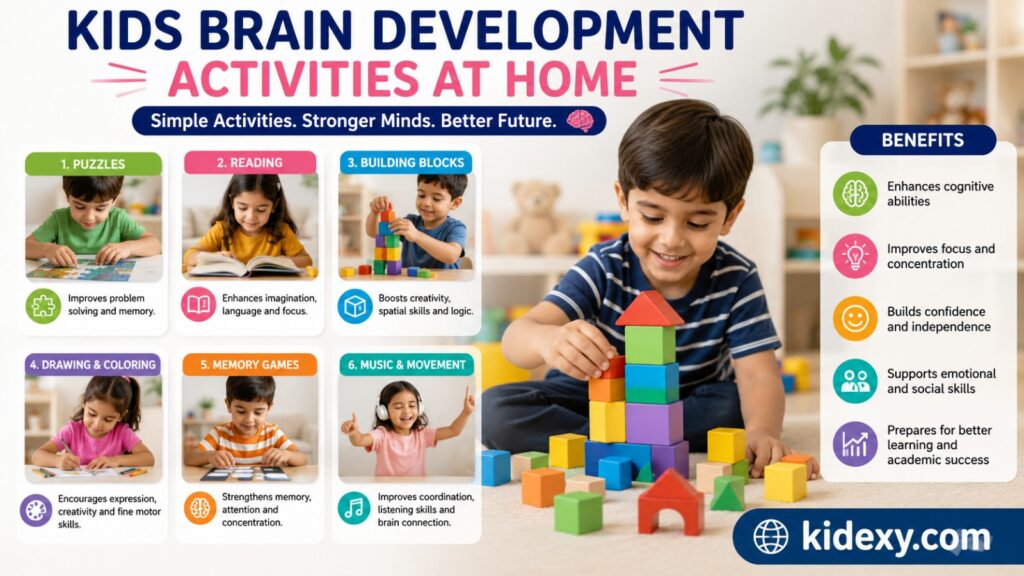
Indoor games often challenge children to think critically and solve problems. Activities that involve puzzles, memory tasks, or strategy encourage cognitive growth and strengthen concentration. These experiences can support academic success by improving focus and reasoning skills.
Games that require decision-making also help children become more independent thinkers. Whether they are figuring out clues during a scavenger hunt or planning their next move in a board game, children learn valuable mental skills through play.
Building Social and Emotional Skills
Playing games with others teaches children how to communicate effectively and work as part of a team. They learn how to share, take turns, and respect rules, all of which are important social skills.
Indoor games can also help children manage emotions. Winning and losing gracefully teaches resilience and sportsmanship, while cooperative activities encourage empathy and understanding.
Active Indoor Kids Games That Burn Energy
Children naturally have plenty of energy, and active indoor games provide an excellent outlet. These activities keep kids moving while making exercise feel like play rather than work.
The best active games require minimal equipment and can be adapted to fit different spaces. With a little creativity, almost any room can become a fun indoor play area.
The Floor Is Lava
The Floor Is Lava is one of the most popular indoor kids games because it combines imagination with movement. Players must move across furniture cushions, pillows, or designated safe zones without touching the floor.
This game encourages balance, coordination, and creative thinking. Children enjoy creating different routes and challenges, making every round feel fresh and exciting.
Balloon Tennis
Balloon Tennis is simple to set up and safe for indoor spaces. Using balloons instead of balls slows the pace of the game, making it suitable for younger children while still being entertaining.
Players can use paper plates, fly swatters, or even their hands as paddles. The game improves hand-eye coordination and keeps children active without the risk of damaging household items.
Indoor Obstacle Course
An indoor obstacle course can be created using everyday household items. Pillows, chairs, blankets, and tape can become part of a fun challenge that encourages movement and creativity.
Children enjoy crawling under tables, jumping over cushions, and balancing along designated paths. Obstacle courses improve agility, coordination, and confidence while providing a great workout.
Red Light Green Light
This classic game remains a favorite among children. One player acts as the caller, while the others move forward when they hear “green light” and stop immediately when “red light” is called.
The game helps improve listening skills, concentration, and self-control. It is easy to organize and works well with children of various ages.
Dance Challenges and Freeze Dance
Music-based games are a fantastic way to encourage physical activity indoors. In Freeze Dance, children dance while music plays and must freeze when it stops.
Dance challenges also allow children to express themselves creatively while staying active. These games improve coordination, rhythm, and confidence while creating a fun atmosphere.
Creative Indoor Kids Games for Imagination
Imaginative play allows children to explore new ideas, develop storytelling skills, and express themselves freely. Creative indoor games encourage children to think beyond everyday routines.
These activities often require little more than household items and a willingness to be imaginative. The possibilities are nearly endless.
Building Blanket Forts
Building a blanket fort transforms an ordinary room into a magical play space. Children can create castles, secret hideouts, or adventure camps using blankets, pillows, and furniture.
Once the fort is complete, it becomes a setting for storytelling, reading, or imaginative games. This activity promotes creativity and problem-solving while providing a cozy retreat.
Charades for Kids
Charades is an entertaining game that encourages creativity and communication. Players act out words, animals, movies, or actions while others try to guess the answer.
Children develop confidence, observation skills, and expressive abilities while enjoying plenty of laughter. The game can be easily adapted for different age groups.
Puppet Shows and Pretend Play
Puppet shows provide an excellent outlet for storytelling and imagination. Children can create their own characters and perform entertaining stories for family members.
Pretend play also encourages children to explore different roles and situations. Whether acting as doctors, teachers, or explorers, children learn valuable social and communication skills.
Indoor Treasure Hunts
Treasure hunts turn the home into an exciting adventure. Parents can create clues that lead children from one location to another until they discover a prize.
This activity strengthens problem-solving skills and keeps children engaged for extended periods. It can also be adapted to include educational questions or themed adventures.
Educational Indoor Kids Games That Make Learning Fun
Learning becomes much more enjoyable when it feels like a game. Educational indoor activities help children build important skills while staying entertained.
The best learning games combine fun with meaningful challenges, allowing children to gain knowledge naturally through play.
Word and Vocabulary Games
Word games help children expand their vocabulary and improve language skills. Activities such as word association, spelling challenges, and storytelling games encourage creative thinking.
These games also support reading and writing development. Children often learn new words without realizing they are participating in an educational activity.
Math-Based Indoor Games
Math games make numbers less intimidating and more engaging. Activities like counting challenges, number hunts, and simple arithmetic competitions can turn learning into an enjoyable experience.
Children gain confidence in their mathematical abilities while practicing essential skills. These games are especially useful for reinforcing concepts learned in school.
Science Exploration Activities
Simple science experiments can provide hours of entertainment and learning. Children enjoy observing reactions, making predictions, and discovering how things work.
Science-based activities encourage curiosity and critical thinking. They help children understand concepts through hands-on experiences rather than memorization alone.
Memory and Matching Games
Memory games strengthen concentration and attention to detail. Matching cards, object recall activities, and pattern recognition challenges help improve cognitive skills.
These games are suitable for various age groups and can be adjusted in difficulty. Regular practice supports memory development and mental sharpness.